
The data
Why It Matters
This is the data behind why affordable, local window cleaning is worth it. Keeping up with regular cleaning means you're not replacing windows nearly as often, which is the real long-term cost most homeowners never see coming.
Cumulative Cost: Cleaning vs. Replacement
Source: This Old House, Angi, NerdWallet — 2026
Assumes a 20-window home on a Bi-Annual plan (2 visits/year at the national average full-home cleaning cost) against one $8,000 full-home replacement, a conservative point inside the cited $3,000 to $20,000 replacement range. Even at year 20, cumulative cleaning cost sits at roughly $8,840, well under the $8,000 replacement figure it's charted against.
Relative Window Condition: Cleaned vs. Neglected
Illustrative model, not measured lab data
Hard water doesn't just look bad. It etches glass.
Sprinkler overspray and rain residue leave calcium and silica behind. Left to bake in Florida sun, those minerals bond to the glass surface, a process called etching, and once that happens no amount of cleaning removes it. Regular cleaning strips the minerals before they ever get the chance to bond.
Sourced from window-care industry guidance, not a clinical study.
Side by side
The raw numbers
Per-window cost, cleaning
$4–15
Per-window cost, replacement
$400–1200+
Full-home cleaning (avg)
$221
Full-home replacement
$3,000–20,000+
Replacement resale ROI (vinyl)
~68.5%
Typical cleaning frequency
Every 2–4 months
The equipment behind the numbers
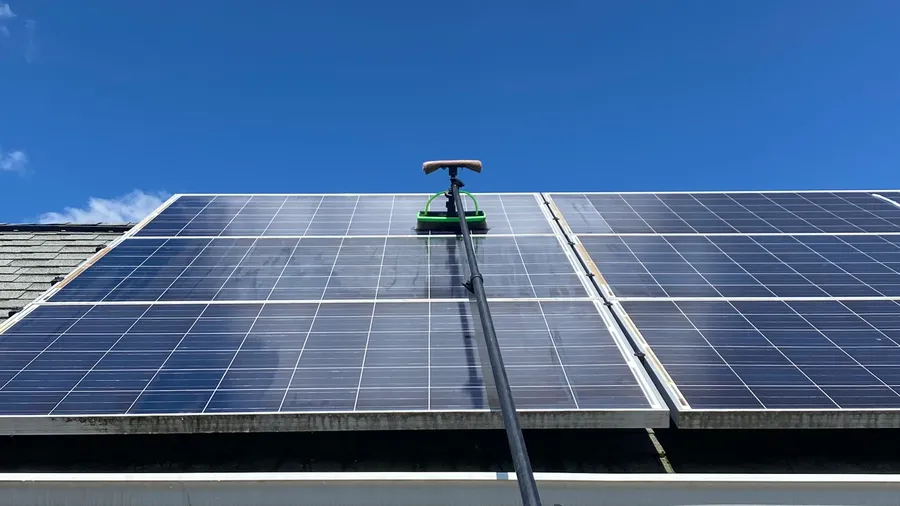
Why our water-fed pole leaves zero spots, and no soap
Reverse osmosis strips out the minerals
Tap water is forced through an RO membrane with pores small enough to block roughly 98% of dissolved minerals and salts, the same calcium and magnesium that cause hard-water spotting.
Deionization polishes it the rest of the way
What's left passes through DI resin beads that grab the remaining charged mineral ions, taking the water down to at or near 0 PPM (parts per million) of total dissolved solids, essentially mineral-free.
Pure water does the cleaning, no soap needed
Water with zero dissolved minerals is naturally "hungry": it bonds with and lifts dirt, pollen, and oxidation on contact. A soft brush head agitates the glass while the pole feeds a continuous rinse, and because there's nothing dissolved in the water left behind, it air-dries completely spot-free with no soap residue and no squeegee needed on exterior high-reach glass.
How we work
The right tool for every pane
Different glass needs different equipment. Here's exactly what shows up on your property and why.
The water
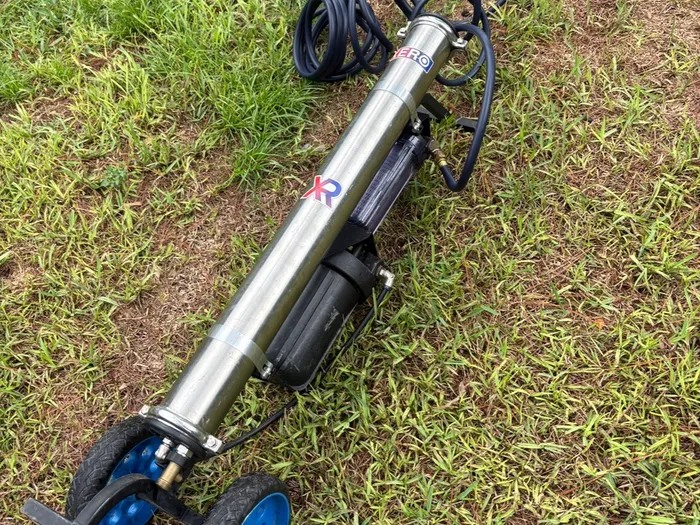
Triple-Stage Reverse Osmosis
Our water-fed system runs through a triple-stage reverse osmosis filter before it ever touches your glass, stripping out the minerals that cause hard-water spotting in the first place.
The finish
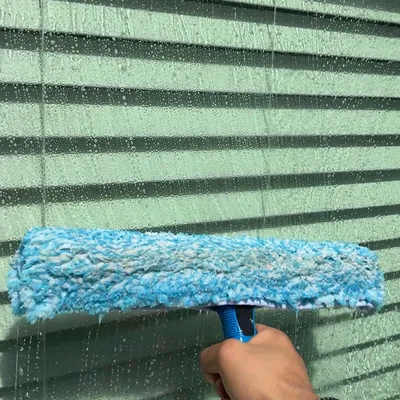
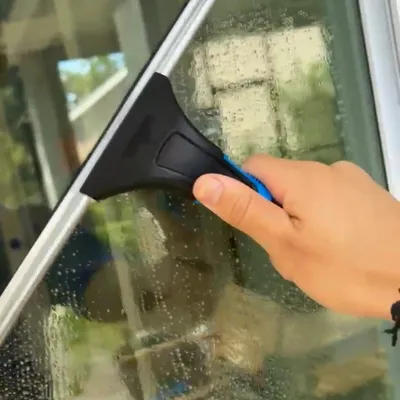
Squeegee & Hand Wash
Interior glass and detail work still gets the traditional treatment: a soapy hand wash with a microfiber applicator, then a squeegee pass for a true streak-free finish, every time, on every pane.
Sources
- This Old House: Window Replacement Cost Guide
- Angi: How Much Does Window Replacement Cost?
- NerdWallet: Cost to Install Replacement Windows
- This Old House: Window Cleaning Cost Guide
- Angi: How Much Does Window Cleaning Cost?
- Thumbtack: Window Cleaning Prices
- Remodeling Magazine: Cost vs. Value Report
- J. Racenstein: Water Fed Pole Techniques for Spot-Free Results
- NT Property Care: Is Deionized Water (Zero-TDS) Good for Window Cleaning?
- EquipMaxx: DI Water Systems Explained for Window Cleaning
The Pelican Guarantee
We make sure everything's great, or we come back and fix it up for free, within a week of the clean.
Get a Free Quote →